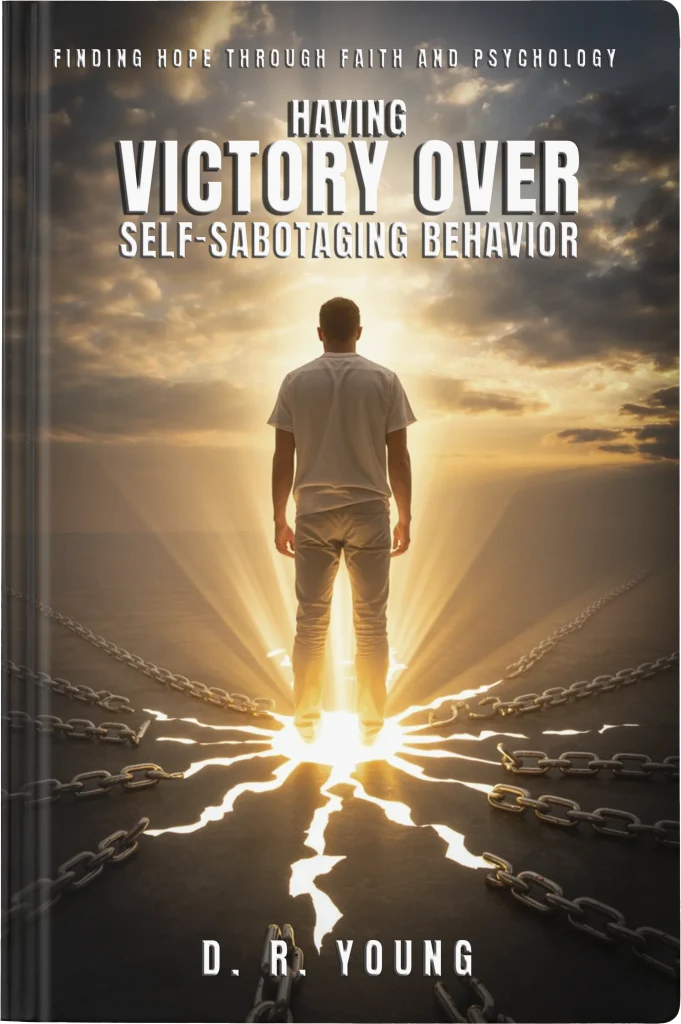
What Makes Having Victory Over Self- Sabotaging Behaviour a Powerful Personal Growth Book?
Explore how faith and psychology help readers understand the concept of self-sabotage, and find a way toward sustained inner change.
An insightful examination of the interplay of faith, psychology, and self-awareness to overcome fear, change inner patterns, and opt for hope.
Some books teach methods. Some offer comfort. The rare ones do both. That is why personal growth books still matter: they help people understand battles with fear, guilt, delay, self-doubt, and old patterns.
Having Victory Over Self-Sabotaging Behaviour: Finding Hope Through Faith and Psychology looks beyond motivation. It explores why people block progress, then gently points toward healing.
Through the voice of Author D. R. YOUNG, the book brings faith and psychology into one thoughtful conversation. It speaks to readers who want change, while facing the hidden habits that pull them backward.
Self-sabotage is not always loud. Sometimes it looks like delaying a dream, doubting a good decision, fearing success, or choosing familiar pain over unfamiliar peace.
The strength of this book lies in how clearly it names those quiet struggles. It understands that people do not always ruin opportunities because they are careless. Often, they are protecting themselves from wounds they have not fully understood.
That makes the reading experience human. The message is simple: broken patterns can be noticed, challenged, and changed.
Some healing books explain what to do, while others only offer encouragement. D. R. YOUNG brings both together, helping readers understand their patterns with faith, psychology, and hope, with patience, courage, and emotional honesty.
The best personal growth books do not speak above the reader; they speak beside them. This one recognizes how self-sabotage can hide behind fear, overthinking, delay, and emotional exhaustion. It doesn’t put the reader on trial; it gives them room to understand, thus making the trip seem honest and all the more human.
Faith in this book is not shown as an escape from pain. It becomes a steady source of courage. That courage matters when willpower feels weak. The book reminds readers that change can still begin in weakness. Hope can become stronger than shame.
Psychology gives language to patterns people often feel but cannot explain. The book helps readers see how old pain, learned beliefs, and emotional reactions can shape today’s choices. That clarity matters because people cannot challenge what they have never named.
Having Victory Over Self- Sabotaging Behaviour: Finding Hope Through Faith and Psychology earns its place by blending reflection with practical emotional awareness. It does not promise instant transformation or pretend that setbacks do not happen. Instead, it invites readers to observe how the inner habit patterns are taking away peace and replacing it with healthier ones.
With the best books for personal growth, readers may walk away understanding:
What makes Author D. R. YOUNG memorable is its gentle honesty. It treats self-sabotage as a layered struggle, not a character flaw. That approach helps readers stop fighting themselves long enough to understand themselves.
Among many personal growth books, this one feels purposeful because it points toward freedom from the inside out.
Every reader who has struggled with self-doubt knows the ache of wanting change while feeling stuck. This book speaks directly to that ache.
It suggests that with faith, psychological insight, and honest reflection, readers can begin to see their patterns with new eyes.
Its strongest message is not perfection. It is the possibility of becoming braver, clearer, and more honest from the inside out.
Readers who feel stuck in fear, doubt, delay, or repeated emotional patterns will find it helpful. It is also useful for anyone seeking faith-centered reflection with practical psychological understanding.
Yes. It guides readers to the understanding of why self-sabotage occurs and how practicing emotional honesty, faith and awareness can help bring about lasting change.
Combines faith with a psychological perspective in a simple, thoughtful manner. It is a compassionate, practical and honest book about the actual work of growth.
Yes. It calls out to fear, inner resistance and low confidence and encourages readers to approach themselves in a patient and hopeful manner.
It offers meaningful insight for readers who want to stop repeating harmful patterns. Readers who wish to begin building a healthier inner life.

Explore how faith and psychology help readers understand the concept of self-sabotage, and find a way toward sustained inner change.

Christian nonfiction readers find hope and faith in Journey to Redemption: Finding freedom in the chaos, a powerful story of healing and spiritual growth.

A compassionate Christian path to grace, healing, and escape from self-sabotaging tendencies for readers who want serenity, growth, and spiritual renewal.

In the book Having Victory Over Self-Sabotaging Behavior, by D. R. Young, explore how faith, healing and self-awareness intersect to enable emotional renewal.

Are you having trouble with your relationship? Learn how Deano Young’s relationship coaching for couples can help you reconnect, rebuild trust, and talk to each other more effectively.

Are you having trouble in love? Find out how Deano Young’s coaching for couples may help you preserve your relationship by rebuilding trust and improving communication.